

The Missionary of Change
by Kevin Cozart
It is noon on Thursday at The University of Mississippi (UM) and the Union Plaza is quickly filling with students along the borders even though the main square remains empty. The vast majority there are African American students. A few non-black students are watching. They are there to see the new Delta Sigma Theta line join with the Kappa Alpha Psi’s in a stroll.
Music begins to pour from the speakers. Members of the two historically black National Pan-Hellenic Council (NPHC) organizations start to dance toward each other, their members making two chains that pass by each other in a choreographed dance. In the 52 years since UM’s integration, these strolls and similar step shows have become commonplace. Yet they’re a drastic change for a university that was chartered in 1844 to support a Southern way of life that included slavery.
The first NPHC to colonize was Omega Psi Phi in 1973. The Alpha Kappa Alpha’s became the first NPHC sorority in 1974. Seven more NPHC Greek-letter organizations have colonized at UM and collectively are known as the Divine Nine.
For the NPHCs, these strolls represent their greatest visibility on a campus dominated by majority Caucasian Greek-letter fraternities and sororities that have large chapter houses on three of the main entrances to campus. None of the NPHCs have houses on campus currently. The strolls also serve to promote diversity at the university and cultural understanding for non-African American students.
Much of the work promoting and educating about diversity falls on the shoulders of Assistant Dean of Students for Multicultural Affairs and Volunteer Services Valeria Beasley Ross. 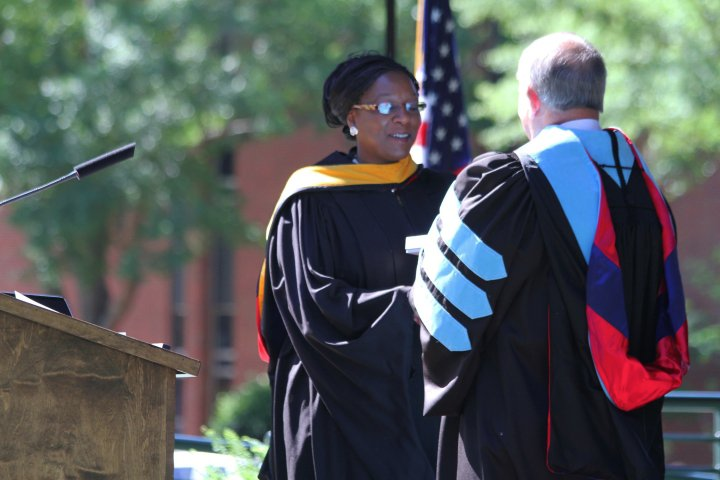 A native of Union County, she attended the Ingomar Attendance Center where she was one of three African American students in her class and the only African American female. In 1982, she graduated as the salutatorian of her class of thirty-two students. She was not allowed to sit on the stage and was forced to read a speech that had been pre-written for her, therefore stripping her of the honor of writing her own. She attended Northeast Community College in Booneville for two years on a basketball scholarship but did not complete a degree.
Ross’ story is all too familiar for many students growing up in Mississippi. According to the 2010 Census, 59.9 percent of Mississippi’s population is Caucasian and 37.4 percent is African American. However of the 900 Mississippi schools or attendance centers for which data is available from the National Center for Educational Statics, 171 of them have an African American student population of less than half of the state-wide average and 318 have a population of more than double the state-wide average. Rephrased, more than one-third of all public schools in Mississippi have an African-American student population that is twice the state average. This data suggests that while Mississippi is racially diverse overall, it is still socially segregated at the K-12 educational level in a de facto manner.
After leaving Northeast, Ross started working various jobs, got married, and had two children. “I left there and went to work. I didn’t know there was anything else I could do at that point.” She worked at a factory and a grocery store, and she worked as a high school teacher’s assistant. In 1990, she took the position of receptionist in the Vice Chancellor of Student Affairs office. Shortly after beginning the position, the executive secretary left and she was promoted, becoming the first executive secretary of color at the university. In 1996, she was again promoted to assistant to the Vice Chancellor of Student Affairs. She realized she needed more education and would be unable to be promoted further without a degree.
In 1997, she left her job and set out to accomplish her personal mission: to obtain a college degree. In less than four years, she earned two bachelor’s degrees and a master’s degree from UM. In 2000, she joined the Office of the Dean of Students as coordinator of multicultural affairs.
For many Mississippians, the path to a college degree can be difficult. Two of the main barriers of access to college are preparation and economic status, and often those who are least prepared are also the least able to afford a degree. These compounded with race can virtually eliminate a student’s chance of obtaining a degree in Mississippi. In Ross’ case, she had an exceptional GPA and a decent ACT score, but colleges paid little attention to her except for her athletic abilities.
Ross has advised the NPHC Executive Council since 2000. Ross is also an advisor for the Black Student Union, UM Gospel Choir, and African Caribbean Student Association. For her work, she has been honored by several student organizations and at the university-wide level winning the 2010 Dr. Thomas R. Frist Student Service Award. None of these accolades would have happened had she not had her own personal mission.
Since joining the Dean of Student’s Office, Ross has adapted her personal mission of getting a college degree to the professional mission of helping other under-represented students earn a college degree by promoting diversity in higher education. Most importantly, Ross has used her position to push the university as a whole to broaden its definition of diversity beyond white and black. She has worked to support under-represented students from African American students - who still only compromise twenty-percent of the student body - to members of the lesbian, gay, bisexual, transgender, and queer/questioning (LGBTQ) community and beyond. The numerous thank you cards that adorn the windows behind her desk are a testament to her mission work.
Many of the initiatives that she has developed or championed allow for these students to catch up with more prepared students and/or have the security net in place to earn a degree without worrying about outside factors such as money or personal safety. These initiatives include the Respect the M campaign, Celebration of Achievement, “Let’s Be Honest” Dialogue Series, Bias Incidence Response Team (BIRT), Hispanic Heritage Month, Native American Heritage Month, LGBTQ History Month, and others. She also works to create safe spaces for students who may have been in the majority in their former schools but are now in the minority or those whose sexual orientation can exclude them from many experiences that are considered part of the normal collegiate experience.
College is the time that most students start to experience cultural diversity in a way that is similar to the “real world.” Small-town attitudes begin to evolve into a global mindset. Universities and colleges can help by promoting cultural learning opportunities like the strolls or more formal discussions at events such as the Day of Dialogue Series hosted by Ross’ office.
According to the American Council on Education on the importance of diversity in higher education, “Education within a diverse setting prepares students to become good citizens in an increasingly complex, pluralistic society; it fosters mutual respect and teamwork; and it helps build communities whose members are judged by the quality of their character and their contributions. It enhances America's economic competitiveness. Sustaining the nation's prosperity in the 21st century will require us to make effective use of the talents and abilities of all our citizens, in work settings that bring together individuals from diverse backgrounds and cultures.”
As more businesses become global in operations and reach, the need for employees with cross-cultural training and sensitivity only increases. Even though much of Mississippi is still rural, family farming operations are giving way to larger corporate entities. In small towns, mom-and-pop businesses are being replaced by corporate franchises such as Wal-Mart, McDonalds, and Subway. The arrivals of Nissan and Toyota and their suppliers have only served to accelerate these trends. With the K-12 educational system still socially segregated, higher education, specifically the four-year universities, must teach cultural diversity.
To this end, the Mississippi Institutions of Higher Learning asked the eight public four-year universities to develop a diversity plan in accordance with four goals:
- Goal 1: Increasing the enrollment and graduation rate of minorities.
- Goal 2: Increasing the employment of minorities in administrative, faculty and staff positions.
- Goal 3: Enhancing the overall curriculum by infusion of content that enhances multicultural awareness and understanding.
- Goal 4: Increasing the use of minority professionals, contractors, and other vendors.
These goals aim at promoting diversity in a way that the K-12 and even community college partners cannot due to their regional nature.
Mississippi’s eight public universities are historically black and one was a women’s college until 1986. Jackson State, Alcorn State, and Mississippi Valley State still have Caucasian student populations of less than ten percent. System-wide, Caucasians make up about 57 percent of the students. At the Mississippi University for Women, male students only make up about one-fifth of the student body, compared to about 42 percent overall. The Ayer’s Desegregation Case Settlement that set the same admissions standards for all eight public universities also links Mississippi’s universities.
As with many of Mississippi’s students, money is the largest factor in hampering these efforts. The last two decades have seen a steady decline in state funding. Delta State University receives the largest percentage of its annual budget from state appropriations (33%) and The University of Mississippi and its medical campus receive the least (12%). As state appropriations decrease, many universities have had to cut “non-essential” budgets and often diversity education is part of those cuts. When the decision is between keeping the lights on and bringing in a speaker, the lights stay on while students are often kept in a cultural darkness.
Another factor that often slows down real progress in diversity education in higher education is how the universities define diversity itself. The term diversity has been framed to mean race in Mississippi. Although the IHL laid out ambitious goals, their primary focus was on racial minorities and sometimes gender. There are those like Ross and Dr. Deidre Cooper Owens, an assistant professor of History, who encourages a move beyond race when thinking of diversity.
In Mississippi, socio-economic class, ethnicity, religion, sexual orientation, and gender identity/expression are other factors to be considered. Decreases in state funding often lead to increases in tuition pricing many Mississippians, regardless of race out, of the market. The barrier to entry is just too high even with the potential payoff. With more people of Latin, Asian, and Middle Eastern descent moving into Mississippi, the cultural mix is changing, yet these ethnic groups are often side-lined in discussions of diversity.
Religion comes into play mainly because The University of Mississippi and her sister institutions operate from a Christian-normative perspective. That is to say that students and faculty are almost expected to be Christians. Those who aren’t can have difficulty finding ways to connect with others since many faculty, staff, and students tend to socialize outside of the work environment through houses of worship. This Christian-normative perspective bleeds back into University life when faculty candidates are asked, “Where do you go to church?” as was the case with Cooper Owens. She says that she quit attending meetings of the black faculty when they would begin their gatherings with a Christian prayer even after she specifically pointed out that she isn’t a Christian. She was made to feel marginalized in a group that was comprised of people who had been marginalized by the majority.
Sexual orientation and gender expression/identity are growing factors in diversity in Mississippi as well. Mississippi’s bans on marriage equality and adoptions by same-sex couples and the recently passed “Religious Freedom Bill” have and will continue to hinder the recruitment of LGBTQ faculty, staff, and students, especially those from outside the state. Much like race, college is also the first time that some LGBTQ students get to socialize with other students like them or non-LGBTQ students get to knowingly meet and interact with someone who is LBGTQ.
With many of the world’s top corporations either supporting LGBTQ-inclusive policies and legislation or being run by openly LGBTQ executives such as Tim Cook at Apple, the need for graduates to be more informed and culturally sensitive to LGBTQ issues is greater than ever. Simply put, homophobia is no longer kosher in the corporate sector and the more students are prepared to live and work in this new world the better.
Ross said the biggest change during her time with the university has been a change in the mindset of students. They are more intelligent and competitive than ever. This has opened them up to embracing diversity and diversity education. Now is the time for the university to capitalize on this.
On April 1 of this year, Ross was promoted to the position of associate dean of students and will be turning over much of her multicultural portfolio to the to-be-named director of Center for Inclusion and Cross-Cultural Engagement. As associate dean, she will have greater influence on the Office of the Dean of Students working in conjunction with the soon-to-start new Dean of Students Melinda J. Sutton. This summer she will be completing and defending her doctoral dissertation to earn a Ph.D. in higher education which she describes as “the greatest gift I have received from the university.” While the title and responsibilities may change, she said her commitment to her mission to ensure that all students and especially all Mississippians have the chance to follow in her footsteps only strengthens.
On Thursday, April 24, the UM Gospel Choir, an almost exclusively African American choir, held its spring concert at North Oxford Baptist Church, an almost exclusively Caucasian church and a denomination that once supported slavery. Change comes slowly in Mississippi and at The University of Mississippi, but it does come. Valeria Beasley Ross is a missionary of that change.
About Kevin Cozart
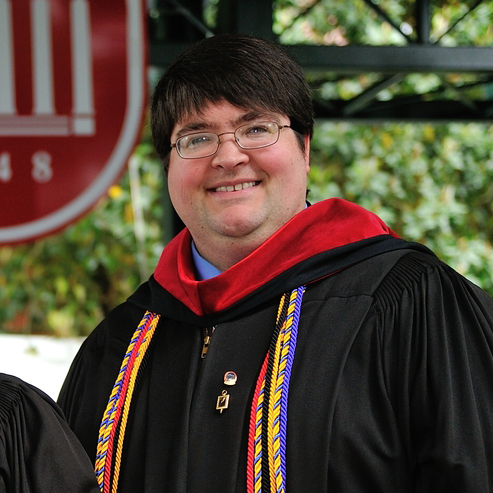
A native Mississippian, Kevin Cozart is the Coordinator of Operations for the Sarah Isom Center for Women and Gender Studies. He holds a Master's Degree in Journalism with an emphasis in Integrated Marketing Communications and a Bachelor's Degree in Liberal Studies with minors in Political Science, Mass Media, and Marketing from The University of Mississippi. He is currently pursuing a Master's Degree in Higher Education and Student Personnel.