
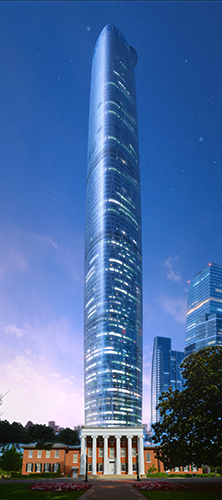
An Introduction
The American public university has undergone a large transformation since the University of North Carolina first opened its doors to the public in 1795. Inspired by Plato’s Academy, what was once a center for obtaining knowledge in the liberal arts, has now largely become a factory for producing early level professionals, only that nearly half of the production doesn’t have employment.
According to a Rutgers University study, only 51 percent of students who have graduated since 2006 have found full time employment. Of that number 11 percent are unemployed. Many graduates are also finding themselves taking jobs that are below their skill level as the same study found that 43 percent of those students took jobs that did not require a college degree. Additionally 55 percent of those students graduated with debt averaging $20,000. One in four of those graduates who have debt have made no progress toward paying the debt.
With so many graduates unemployed and in debt from their education, the necessity and/or purpose of education has greatly come into question. Adding further fuel to the flame of skeptics is the fact that some of the most successful people in American have either dropped out of college or never attended college in the first place.
As the perceived purpose of higher education faces significant questioning, a review of the value of higher education is necessary and prudent. The 2014 Narrative Journalism class at the Meek School for Journalism and New Media has undertaken the call.
Jeffrey Wright begins the study by taking a significant look at the charter school model of primary and secondary education and searches for whether that model offers any insights into the future direction of higher education.
From there, Ed Connolly analyzes the community college system in the state of Mississippi finding that transfer students are doing well at Ole Miss. But is their success due mainly to their self-motivation and tenacity, to their former community college performance in preparing them for a smooth and successful four-year transfer, or a little of both. What can their experience tell us about the future of community college education in Mississippi?
Next, the story focuses on the student as Xiaoting Zhang takes a look at the major selection process and the factors that are involved with it. What factors are contributing into a student’s major selection? Are they still professionally driven, or have other interests become more important?
Continues the focus on the student experience, Chun Wu analyzes the impact that distance learning has had on higher education and the student experience. Online learning and satellite campus are becoming increasingly popular at public universities. What kind of impact is this situation having?
Kevin Cozart discusses the role and economic gain of diversity in higher education through the personal narrative of Associate Dean of Students Valeria Beasley Ross.
Athletics still play a large role in the campus experience at most public universities, and at many schools athletics is a primary revenue generator. Austin Miller analyzes the impact that the ever-increasing athletic revenues are having on the state of the student athlete, while Tyler Carter reviews the effect that the Northwestern University Football Player’s unionization will have one the future landscape of the student athlete and college athletics overall.
Finally the review concludes with Bill DeJournett’s story on the current state of the faculty. Colleges and universities are using adjunct faculty members increasingly as a cheap labor pool. More than fifty percent of all university faculty members in the U.S. hold part-time appointments, earning much less than their tenured or tenure-track counterparts, have little to no job security and rarely receive benefits. What kind of effect is this fact causing on campus?
Each story has one all encompassing element, money. The almighty dollar is driving much of the current state of academia. Therefore, the question that remains, “Is the Ivory Tower becoming a corporate Tower?”