 Sacred Harp Singings Sacred Harp Singings
![[UPDATED]](pix/updated.gif) Annual
singings in Mississippi, 2024.
Annual
singings in Mississippi, 2024.
![[NEW]](pix/new.gif) Annual Sacred Harp
Singings. This new directory, compiled by Jeremiah Ledbetter, covers
shape-note singings in the Sacred Harp, as well as other books. The
entries may be updated by the sponsors of singings. Another resource,
updated annually, is the "minute book"
directory of singings, comprising pages 7-28 of
Sacred
Harp Singings: 2023 Minutes, 2024 Directory.
This PDF publication, compiled by Judy Caudle, David Ivey and Samuel Sommers and published
by the Sacred Harp Musical Heritage Association, covers singings and conventions
throughout the United
States and beyond. The 1991 Edition is
used except where otherwise indicated. Also included are singings in other
Sacred Harp editions (Cooper and J.L. White), as well as
other four-shape collections: Southern Harmony, Shenandoah
Harmony and Georgian Harmony. Please check
for cancellations in 2023 due to the COVID-19 pandemic. Those who host
singings should update information (locations, contact persons, date
changes and cancellations) at minutes@fasola.org and on the Fasola
Singings Mailing List at https://groups.google.com/g/fasola-singings
The former list is no longer maintained. Instead go the online sources
listed here.
Annual
“Old Harp” singings, 2024.
This directory covers Tennessee singings in The New Harp of
Columbia (oldharp.org)
Regular Local Singiings, compiled by
Jeremiah Ledbetter. These are
mostly briefer than all-day, but more frequent (four times a year or more).
They draw mainly local singers, and may function as “practice
sessions,” but traveling singers and beginners are welcome
(shapenotesingings.com)
Annual Sacred Harp
Singings. This new directory, compiled by Jeremiah Ledbetter, covers
shape-note singings in the Sacred Harp, as well as other books. The
entries may be updated by the sponsors of singings. Another resource,
updated annually, is the "minute book"
directory of singings, comprising pages 7-28 of
Sacred
Harp Singings: 2023 Minutes, 2024 Directory.
This PDF publication, compiled by Judy Caudle, David Ivey and Samuel Sommers and published
by the Sacred Harp Musical Heritage Association, covers singings and conventions
throughout the United
States and beyond. The 1991 Edition is
used except where otherwise indicated. Also included are singings in other
Sacred Harp editions (Cooper and J.L. White), as well as
other four-shape collections: Southern Harmony, Shenandoah
Harmony and Georgian Harmony. Please check
for cancellations in 2023 due to the COVID-19 pandemic. Those who host
singings should update information (locations, contact persons, date
changes and cancellations) at minutes@fasola.org and on the Fasola
Singings Mailing List at https://groups.google.com/g/fasola-singings
The former list is no longer maintained. Instead go the online sources
listed here.
Annual
“Old Harp” singings, 2024.
This directory covers Tennessee singings in The New Harp of
Columbia (oldharp.org)
Regular Local Singiings, compiled by
Jeremiah Ledbetter. These are
mostly briefer than all-day, but more frequent (four times a year or more).
They draw mainly local singers, and may function as “practice
sessions,” but traveling singers and beginners are welcome
(shapenotesingings.com)
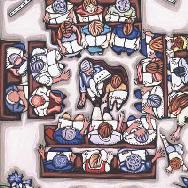
An all-day Sacred Harp singing is a day devoted to music and fellowship. All-day singings are usually held in small rural churches, or in schoolhouses, courtrooms, or community centers. They usually take place on the same weekend every year, say, the Fourth Sunday in May, and often mark the annual homecoming for a local church or community, when local natives return from far and near to decorate the graves in the nearby cemetery, visit with friends, and enjoy the music that sustained their parents and grandparents. Some annual singings and conventions extend to two or even three days of singing, and may meet in various locations from year to year.
Typically, an all-day singing begins between 9:30 and 10:00 AM. When the singers have seated themselves by singing part (tenor, bass, treble and alto), the singing begins with an opening song, a prayer, and a brief organizational meeting. Each individual is invited to take a turn leading a lesson, that is, standing in the center of the “class,” choosing one or more songs by page number, sounding the opening pitch (or receiving the key from an experienced singer nearby), and leading the song by beating time with a simple vertical motion of the hand, first with the singing syllables (fa, sol, la, and mi), and then with the words. The officers may call a brief recess in the morning or afternoon, but the only extended break comes at noon, when everyone proceeds to outdoor tables or a fellowship hall for an abundant dinner on the grounds provided by local families.
After an hour, or when the dinner is cleared, the singers return to the main building to continue the rotation of leaders. There may be a brief “memorial lesson” in honor of singers or community members who have died in the past year; indeed some annual singings are themselves memorials to beloved singers and family members. Singings usually end between 2:30 and 4:00, depending on the number of leaders. After announcements of upcoming singings, there is a closing song and a prayer of dismissal.
Warren Steel (mudws@olemiss.edu)
[ Sacred Harp Singing |
Warren Steel |
Music Dept. |
UM Home ]
Last modified
16 April 2024
Copyright © 1994-2023 D.W. Steel. All rights reserved.
![[HTML 4.0]](pix/valid_html4.0.gif)